
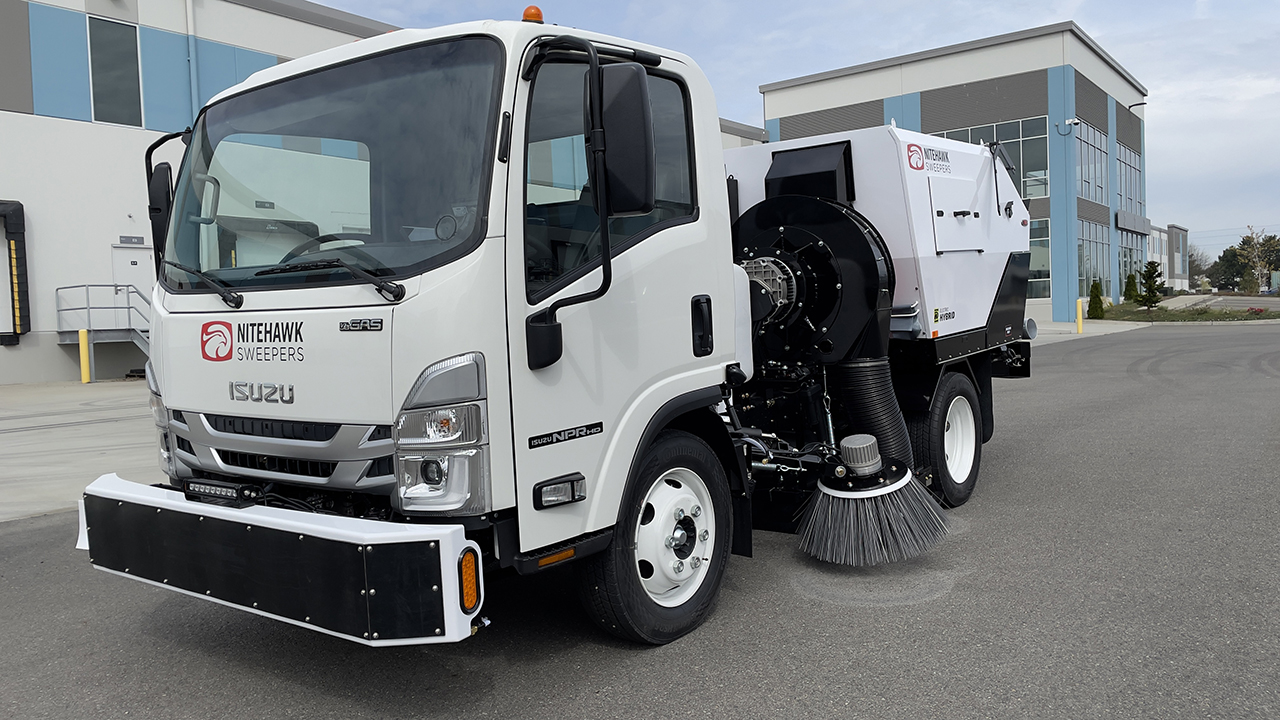
How to Start a Parking Lot Sweeping Business: A Complete Guide to Owning and Operating a Street Sweeper
Starting a parking lot sweeping business can be an attractive opportunity for entrepreneurs looking to enter the commercial services industry. With the right equipment, a solid business plan, and a commitment to dependable service, one truck can become the foundation of a business serving property managers, retail centers, industrial facilities, construction companies, and municipalities.
Unlike some businesses that rely on constantly finding new customers, sweeping companies can build their revenue around recurring service agreements. Parking lots need ongoing maintenance, and property owners often prefer to work with a reliable contractor who can keep their properties clean without requiring constant supervision.
For entrepreneurs considering a dedicated parking lot sweeping truck from a manufacturer such as NiteHawk Sweepers, understanding the business behind the equipment is just as important as choosing the right machine.
Here's how to get started, find customers, manage expenses, and build a successful sweeping operation.
1. Understand the Parking Lot Sweeping Business
A parking lot sweeping company provides specialized exterior cleaning services using commercial sweeping equipment. Rather than relying on manual labor or small walk-behind machines, operators use truck-mounted sweepers designed to collect leaves, dirt, gravel, litter, and other debris from paved surfaces.
The business serves a broad range of customers, including:
- Shopping centers and retail plazas
- Apartment complexes and condominium communities
- Office buildings and business parks
- Hospitals, medical facilities, and school campuses
- Warehouses and industrial properties
- Construction sites and new developments
- Hotels, restaurants, and entertainment venues
- Municipalities and public agencies
Many properties need sweeping on a regular schedule. A busy retail center might require several visits per week, while a smaller office complex may only need weekly or monthly service.
This recurring demand is one of the biggest advantages of the business. Instead of selling a one-time cleaning job, you can establish ongoing contracts that create predictable revenue and help you plan your routes, staffing, and equipment expenses.
Why clean parking lots matter
A clean parking lot does more than improve a property's appearance. Regular sweeping removes abrasive materials that can contribute to pavement wear, reduces loose debris that may create hazards, and helps prevent litter and sediment from being carried into storm drains.
For commercial property owners, the parking lot is often the first part of a property visitors encounter. Keeping it clean helps reinforce a professional image and supports broader property maintenance efforts.
That creates an opportunity for a sweeping contractor to become a long-term maintenance partner rather than simply another vendor.
2. Choose the Right Sweeping Truck
Your sweeper is the central asset of your business. Its performance, reliability, operating costs, and suitability for your customers will influence how many jobs you can complete and how much profit you retain.
One manufacturer worth researching is NiteHawk Sweepers, which builds dedicated sweeping trucks for applications ranging from commercial parking lots and business parks to construction sites and public streets.
Its product lineup includes the Osprey II and Raptor II, as well as an electric hybrid option. Depending on the model and configuration, features can include hydraulic sweeping systems, dust suppression, curb brooms, work lights, cameras, and equipment storage.
You can explore the manufacturer's equipment and applications at NiteHawk Sweepers.
What should you look for in a sweeper?
Before purchasing a truck, evaluate several factors:
Reliability and maintenance. Downtime means missed jobs, dissatisfied customers, and lost revenue. Research service intervals, replacement parts, warranty coverage, and the availability of qualified technicians.
Operating efficiency. Fuel consumption, hydraulic performance, broom wear, and routine maintenance all affect your cost per hour. A truck with a higher purchase price may still make financial sense if it delivers lower operating costs over its useful life.
Sweeping performance. Consider the types of debris and properties you expect to service. A retail parking lot, a construction entrance, and a municipal street can present very different operating conditions.
Visibility and safety. Cameras, appropriate lighting, traffic warning systems, and operator visibility can be valuable when working around parked vehicles, pedestrians, and moving traffic.
Hopper capacity and productivity. The amount of debris a truck can collect before unloading affects route efficiency. Consider the size and condition of your target properties.
Manufacturer and dealer support. Training, technical assistance, warranty service, and parts availability can be particularly important for a new business with only one truck.
Do not choose a sweeper based on the purchase price alone. Compare the total cost of ownership, including financing, fuel, maintenance, insurance, consumables, and expected downtime.
The best truck is the one that fits your intended work and allows you to deliver reliable service at a competitive price.
3. Develop a Business Plan Before Buying Equipment
A common mistake is purchasing an expensive sweeper first and looking for customers afterward. A more disciplined approach is to validate the market before making a major investment.
Start by defining your service area and identifying the types of customers you want to pursue. Research how many commercial properties exist within a reasonable driving distance, who manages them, and whether they already have sweeping contractors.
Next, estimate your startup expenses.
Potential startup costs include:
- Sweeper truck purchase or down payment
- Loan payments and financing fees
- Commercial vehicle insurance and general liability coverage
- Business registration and applicable licenses
- Fuel and routine maintenance
- Replacement brooms, filters, and other consumables
- Parking, storage, and equipment security
- Accounting software, scheduling tools, and bookkeeping
- Website development, branding, and sales materials
- Working capital for repairs and slow-paying customers
The actual investment varies significantly depending on whether you buy new or used equipment, finance the vehicle, operate alone, or hire employees.
Get written quotes rather than relying on rough estimates. Ask the manufacturer or dealer for current equipment pricing, available configurations, warranty information, and financing options where offered.
Build a realistic financial forecast
Estimate your monthly revenue based on the number of contracts you can reasonably win and service.
Then subtract your direct operating costs and fixed expenses. Remember that your own labor has value, even if you initially operate the truck yourself.
Your budget should also account for taxes, equipment depreciation, loan principal payments, and money reserved for unexpected repairs. Accounting profit and available cash are not the same thing.
Most importantly, calculate how much revenue the business must generate before you can pay yourself and maintain a healthy cash reserve.
4. Register the Business and Address Legal Requirements
Once you have validated the opportunity, establish the business properly.
Choose a business name, determine an appropriate legal structure, register with the relevant state authorities, and obtain the tax registrations and business licenses required for your location.
You should also investigate:
- Commercial auto insurance requirements
- General liability coverage
- Workers' compensation and employment obligations, if hiring
- Commercial vehicle registration and applicable driver licensing requirements
- Local rules for storing, transporting, and disposing of collected debris
- Environmental requirements relating to stormwater, wash water, and waste handling
- Site-specific requirements for construction or municipal work
Requirements vary by jurisdiction and the type of work performed. For example, Washington State offers a Business Licensing Wizard to help entrepreneurs identify relevant licensing and permit requirements.
Do not assume that debris collected from a parking lot can automatically be dumped at any convenient location. Confirm acceptable disposal arrangements and any applicable environmental obligations before beginning operations.
If you plan to bid on public street sweeping contracts, investigate the additional qualifications, insurance limits, safety requirements, and procurement procedures involved.
5. Find Your First Customers
Customer acquisition is one of the most important parts of building a successful sweeping business. A reliable truck cannot generate revenue while sitting in the yard.
The goal is to build relationships with people who manage multiple properties and need dependable exterior maintenance.
Start with commercial property managers
Property managers are an excellent starting point because one relationship may lead to several locations.
Research commercial property management firms, shopping center owners, industrial landlords, and facility management companies in your service area.
Contact them directly and introduce your company. Explain the properties you serve, your availability, and the benefits of scheduled sweeping.
Keep your initial message simple. Offer to inspect the property and provide a written proposal based on its size, condition, and cleaning requirements.
Approach complementary service businesses
Landscaping companies, pressure washing contractors, parking lot maintenance companies, and commercial cleaning providers may already have relationships with your target customers.
Some may welcome a reliable sweeping subcontractor rather than purchasing their own equipment.
These partnerships can help you build a customer base while developing your own direct accounts.
Use targeted local marketing
A professional website should explain your services, coverage area, contact information, and how customers can request a quote.
Useful search phrases to target include:
- Parking lot sweeping in [your city]
- Commercial street sweeping services
- Construction site sweeping
- Retail center parking lot maintenance
- Industrial property sweeping
A well-maintained business profile on Google can also help local customers discover your company. Ask satisfied customers for honest reviews and permission to use relevant project photos.
Direct outreach, referrals, and local networking can be especially effective when you're starting out. Consistent follow-up often matters more than spending heavily on advertising.
6. Price Your Services to Make a Profit
Pricing should reflect the actual cost and complexity of completing a job, not simply what you think a customer will pay.
Several pricing models can work:
Per visit: Charge a set amount for a defined property and scope of work. This is straightforward for recurring parking lot maintenance.
Hourly: Charge for the time required, with clear provisions for travel, waiting, and unusual conditions.
Per acre or square footage: Use property size as one input, while accounting for layout, debris volume, obstacles, and the amount of edge and curb work required.
Monthly contract: Offer a recurring service agreement with a defined schedule, scope, and monthly price.
Project-based pricing: Quote construction cleanup, post-event sweeping, seasonal leaf removal, or other one-time jobs individually.
Calculate your true cost per hour
Your operating cost should include more than fuel. Consider:
- Driver wages and payroll-related costs
- Fuel and fluids
- Broom and consumable replacement
- Routine maintenance and repairs
- Insurance
- Financing and equipment ownership costs
- Travel time between properties
- Disposal and unloading time
- Administrative overhead
Suppose your fully allocated operating cost is $100 per billable hour and you want a 25% gross margin on that cost base.
Your target price would be:
$100 ÷ (1 − 0.25) = $133.33 per billable hour.
This is an illustrative calculation, not an industry rate. Your actual costs and achievable prices will depend on your market, equipment, contract terms, and productivity.
The distinction matters: adding a 25% markup to $100 produces $125, which is only a 20% margin.
Also, not every hour worked is billable. Travel, maintenance, quoting, and administration must be recovered through your pricing. If you underestimate these activities, a busy schedule can still produce disappointing profits.
7. Focus on Recurring Contracts
Recurring contracts are often the foundation of a stable sweeping business.
Rather than relying entirely on one-time jobs, aim to develop a portfolio of customers with predictable cleaning schedules.
For example, a route might include several retail centers swept overnight, a group of industrial properties serviced during scheduled windows, and a few weekly accounts near your existing customers.
The objective is to build a geographically efficient route. A cluster of nearby accounts can be more profitable than the same revenue spread across a wide service area.
Create clear service agreements
Each contract should define:
- Which areas will be swept
- How frequently service will occur
- What time window is available
- What debris and tasks are included
- How exceptional debris volumes will be handled
- Pricing, invoicing, and payment terms
- Procedures for weather disruptions and access restrictions
- How additional work will be authorized
Clear expectations reduce disputes and make it easier to deliver consistent service as your customer base grows.
8. Operate Efficiently and Protect Your Equipment
Once you begin winning contracts, operational discipline becomes a major competitive advantage.
A well-planned route reduces unnecessary driving, fuel consumption, and unproductive time.
Group customers by location, schedule jobs around access restrictions, and coordinate with property managers when vehicles or deliveries could interfere with sweeping.
Establish a preventive maintenance routine
Inspect the truck before and after shifts. Follow the manufacturer's recommended maintenance schedule and keep records of inspections, repairs, broom changes, and other consumables.
Train yourself and any employees to recognize unusual noises, reduced pickup performance, hydraulic issues, and other signs that maintenance may be needed.
Small problems are often easier and less expensive to address before they cause a breakdown during a scheduled service.
Make safety part of the operating system
Sweeping frequently takes place around parked vehicles, pedestrians, traffic, loading docks, and construction equipment.
Use appropriate traffic warning equipment and personal protective equipment, follow safe operating procedures, and make sure operators understand the truck's limitations.
When working at night, prioritize visibility and ensure the job can be completed safely without rushing.
Reliable service means finishing the work correctly while protecting your employees, customers, equipment, and the public.
9. Deliver More Than a Clean Parking Lot
The best contractors make life easier for their customers.
Show up when scheduled. Follow site-specific instructions. Communicate when conditions change. Notify the customer promptly if an access problem or equipment issue affects service.
A simple service report with the date, time, property, and completed work can reassure property managers that the job was done.
Photographs can also help document unusual debris, blocked areas, or conditions that require additional attention.
After completing a job, check whether the customer is satisfied and whether adjustments are needed. Small improvements in communication and consistency can distinguish your business from competitors who focus only on completing the physical work.
Over time, this reputation can lead to renewals, referrals, and opportunities to service additional properties managed by the same customer.
10. Expand Your Services as the Business Grows
Once your core parking lot sweeping operation is established, consider related services that fit your equipment, customer base, and operating capabilities.
Possible opportunities include:
- Construction site sweeping
- Private road and business park sweeping
- Warehouse and industrial yard cleaning
- Seasonal leaf and debris removal
- Post-construction cleanup
- Municipal street sweeping
- Event and stadium parking cleanup
- Additional exterior maintenance services delivered through qualified partners
NiteHawk's equipment applications include parking lots, construction sites, business parks, airports, school campuses, hospitals, and public streets. This breadth demonstrates the range of potential markets a properly equipped sweeping contractor may explore.
However, not every job is suitable for every truck or every new business. Evaluate the equipment requirements, training, safety considerations, disposal arrangements, and contract economics before entering a new market.
Growth can also mean adding a second truck, hiring another operator, or expanding into a neighboring territory. The best time to expand is when existing contracts provide a credible foundation for the additional expense.
11. Track the Numbers That Determine Success
Successful owners measure their performance rather than relying on the appearance of a full schedule.
Review a small set of metrics regularly:
Revenue per truck-hour: Measures how effectively operating time generates sales.
Contribution margin by customer: Reveals which accounts generate enough revenue to cover their direct costs.
Route utilization: Shows how much of your available operating time is spent on paid work rather than travel, maintenance, and other nonbillable activities.
Customer retention: Indicates whether clients are satisfied and contracts are renewing.
Equipment downtime: Helps identify reliability issues that may be undermining productivity.
Accounts receivable: Tracks how quickly customers pay and whether late payments are creating cash-flow problems.
Review these figures monthly. If an account consistently requires more time than expected, adjust the route, renegotiate the scope, or revise the price when appropriate.
Likewise, avoid expanding simply because revenue is increasing. Make sure each additional contract contributes enough to cover its costs and support your long-term goals.
12. Common Mistakes to Avoid
New sweeping contractors can run into trouble by making a few preventable mistakes.
Buying too much equipment too soon. A large equipment payment creates pressure before the business has a reliable customer base.
Underpricing jobs. Ignoring travel, maintenance, downtime, and administrative costs can turn apparently profitable work into a loss.
Relying on a single customer. Losing one major account can destabilize a small business. Diversify your customer portfolio over time.
Ignoring preventive maintenance. An unexpected breakdown can lead to missed service commitments and expensive repairs.
Accepting every job. Unprofitable routes and unsuitable work can consume the time needed to build better accounts.
Neglecting cash reserves. Repairs, seasonal fluctuations, and slow payments can create financial stress even when the company is winning work.
Overlooking compliance. Inadequate insurance, improper waste handling, or failure to follow applicable regulations can jeopardize the entire operation.
Avoiding these mistakes is often more important than chasing rapid growth.
Conclusion: Build a Business, Not Just a Truck Route
Owning and operating a parking lot sweeper can provide a path into the commercial maintenance industry, but long-term success depends on the entire business system surrounding the equipment.
Choose a truck suited to your market. Understand your operating costs before setting prices. Build recurring contracts with reliable customers. Maintain your equipment, prioritize safety, and deliver consistent results.
Manufacturers such as NiteHawk Sweepers provide equipment designed for a variety of commercial and municipal applications. The entrepreneur's job is to turn that capability into a service that customers trust and are willing to pay for repeatedly.
Start with a manageable service area, focus on building a strong base of recurring accounts, and expand only when the numbers support it.
The most successful sweeping businesses aren't necessarily the ones with the most trucks. They're the ones that consistently deliver dependable service, manage costs carefully, and build lasting customer relationships.